A loaded carry exposes weaknesses that a barbell never will. Under a bar, the load path is fixed, the bar guides you, and your nervous system can hide compensations behind a groove you have rehearsed a thousand times. Pick up an awkward, off center object and walk with it, and every asymmetry in your trunk, every leak in your grip, every millimeter of lateral shift in your spine gets exposed in real time.
This is the performance bottleneck most hybrid athletes never address: they can squat and deadlift heavy numbers on a stable bar path, yet their trunk collapses the moment load becomes dynamic and unsupported. Sport, and life outside the gym, rarely hands you a symmetrically loaded barbell. It hands you a sandbag, a child, a piece of furniture, an awkward kettlebell held in one hand while you open a door with the other. On days without a bell in reach, the same trunk demand still needs a home, which is exactly what a well built bodyweight workout plan should be training alongside it, not instead of it.
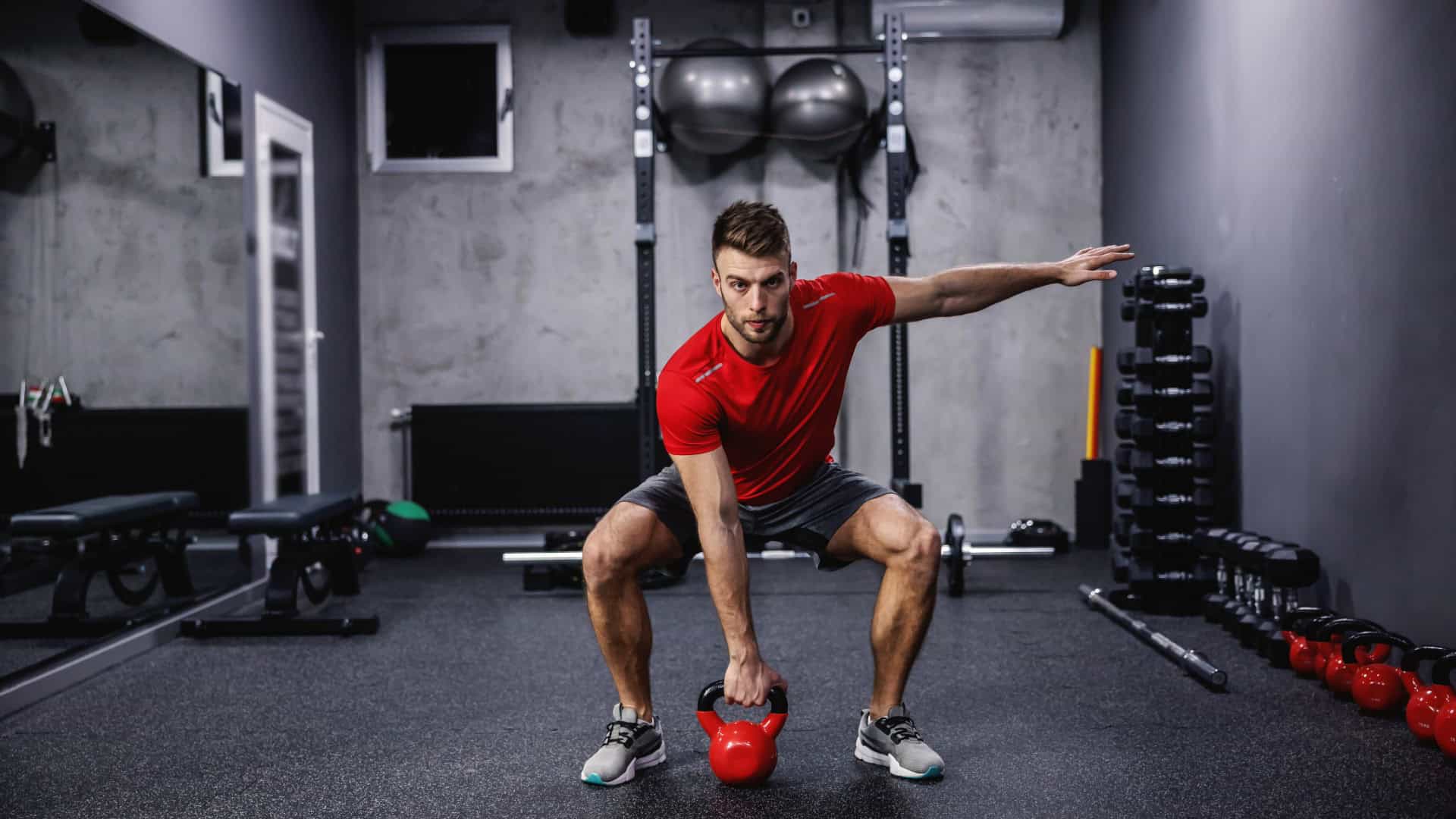
The fix is not more isolated core work. It is kettlebell functional training built around heavy carries, where grip, trunk, and hip all fire together against a genuinely destabilizing load. I have rebuilt more than one athlete's trunk stability this way after years of crunches did nothing for their actual carrying capacity, and the transfer to sport specific power output was immediate.
The Science of the Heavy Carry Protocol
Carries are not a core exercise bolted onto a strength program. They are a distinct loading pattern with three physiological mechanisms worth understanding before you load the kettlebell.
- Grip mediated irradiation: maximal grip tension recruits a cascade of proximal muscle activation through the forearm, upper arm, and shoulder girdle into the trunk. Squeeze harder and your entire kinetic chain stiffens, which is why grip failure, not leg fatigue, is usually the true limiter in a carry.
- Axial compressive loading: walking under load places sustained compressive force through the spine in a way that static bracing drills cannot replicate. This is a legitimate osteogenic stimulus for bone density, and it trains the deep stabilizers to hold a neutral spine under fatigue rather than under a single controlled rep.
- Anti lateral flexion torque resistance: an offset load, such as a single kettlebell in the rack or suitcase position, creates a constant torque trying to pull your torso sideways. Resisting that torque step after step builds oblique and quadratus lumborum capacity that a symmetrical deadlift simply does not touch, and it carries directly over to anyone working on how to strengthen thoracic spine control under rotation, since a stiff mid back just forces the lumbar spine to absorb that same lateral pull instead.
The Performance Template / Protocol
Phase 1: Bilateral Foundation
- Protocol: Farmer style carries with matched kettlebells, 3 to 4 sets of 40 meters.
- Execution: Ribs stacked over pelvis, shoulders packed down and back, no shrugging to compensate for grip fatigue.
- Focus: Establish baseline grip endurance and posture before introducing asymmetry.
Phase 2: Asymmetric Loading
- Protocol: Single kettlebell suitcase carries and rack carries, alternating sides, 3 sets of 30 meters per side.
- Execution: Resist the lateral pull actively, this is the core of true kettlebell functional training, not passive tolerance of the lean.
- Focus: Build anti lateral flexion torque resistance under a genuinely destabilizing single sided load.
Phase 3: Odd Object Integration
- Protocol: Sandbag bear hug carries or mixed implement medleys (kettlebell plus sandbag), 4 to 5 rounds for distance or time.
- Execution: Brace before initiating the walk, breathe behind the brace, do not let the exhale collapse trunk stiffness mid carry.
- Focus: Transfer the stability built in Phases 1 and 2 to unpredictable, shifting loads that mimic real world demands. Stretch the round count or distance far enough and this phase doubles as genuine conditioning work, the same aerobic tax athletes chase when they are dialing in how to improve your vo2 max without giving up their strength days.
Tracking and Performance Metrics
| Tracking Metric | Optimal Progress Sign | Failure / Red Flag |
|---|---|---|
| Grip Fatigue Onset | Grip holds steady past 60 seconds before needing a regrip | Grip failure under 30 seconds, implement drops mid carry |
| Trunk Lateral Lean (Suitcase Carry) | Torso stays within 5 degrees of vertical for the full distance | Visible lateral flexion beyond 15 degrees, compensatory shoulder hike |
| Load to Bodyweight Ratio Progression | 5 to 10 percent increase in carried load every 2 week block | Stalled load for 4 or more weeks with visible form breakdown at the same weight |
The High-Performance Takeaway: Raw power means nothing if it collapses the second the load stops cooperating with you. Build your grip strength and trunk torque resistance under a genuinely uncooperative object, and every other lift you own will feel more stable by comparison.