
Public outdoor gyms have become a genuine urban infrastructure movement in cities across Europe, Asia, and increasingly North America, and the story of how they got there is more interesting than their unassuming presence in public parks suggests. A phenomenon that started as a grassroots fitness movement in China’s public squares has been adopted by city planners, public health departments, and landscape architects as a legitimate tool for reducing the barriers to physical activity. Understanding how it happened explains a lot about where it is going next.
How the Movement Started
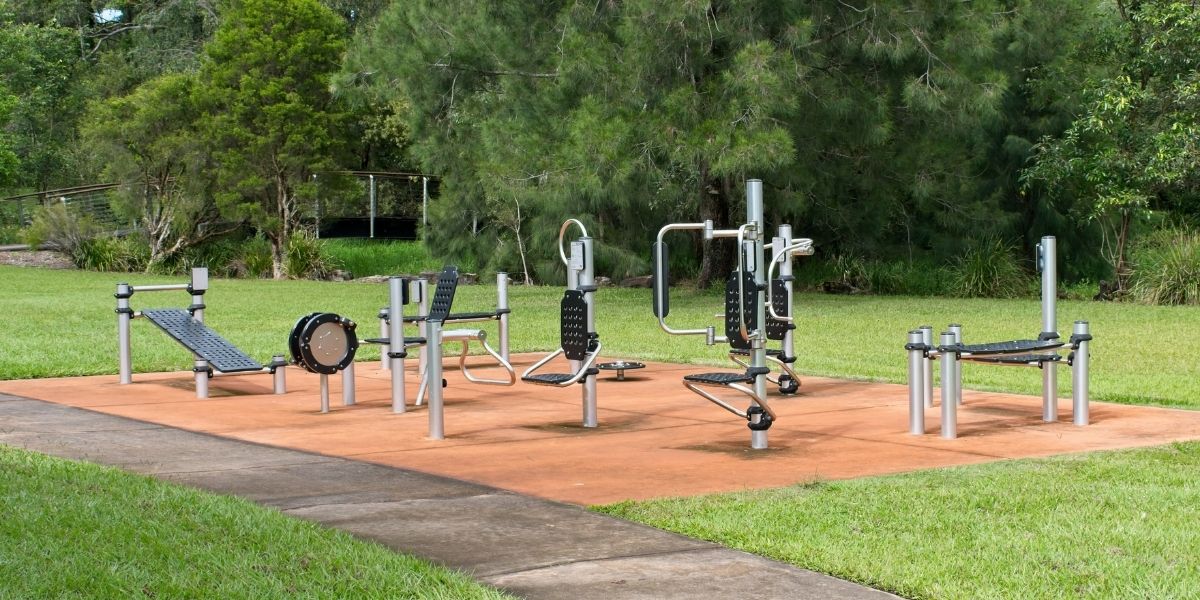
The origins of public outdoor gyms trace most directly to China, where outdoor exercise equipment in public parks and squares became a cultural fixture from the 1990s onward. The equipment, typically consisting of simple mechanical resistance machines, pull-up stations, and balance apparatus installed on public land, responded to a specific public health context: rapid urbanization, ageing population, and a cultural tradition of communal outdoor exercise that predated modern gym culture by centuries.
The Chinese model spread through observation rather than policy transfer. Urban planners visiting Chinese cities saw functional exercise infrastructure embedded in public space and brought the concept home. The European adoption, which accelerated significantly through the 2010s, produced a more sophisticated equipment specification than the Chinese original: weatherproof steel construction, resistance mechanisms calibrated to produce meaningful training stimulus, and site selection that maximized accessibility to residential populations.
The UK’s outdoor gym network, which includes sites in London, Manchester, Edinburgh, and dozens of smaller cities, represents one of the most developed public outdoor gyms systems outside East Asia. Many of these installations were funded through Sport England grants combined with local authority capital budgets, responding to public health data showing that cost and access were the primary barriers to gym participation in lower-income urban populations.
The principle of choosing materials for longevity applies directly to public outdoor gyms equipment specification: the sites that have lasted longest use marine-grade stainless steel components with minimal moving parts, because complexity in public outdoor environments creates maintenance costs that sustainability-focused local authorities cannot absorb.
Cities Leading the Movement
Copenhagen has integrated public outdoor gyms into its comprehensive cycling and active transport infrastructure more systematically than any other European city. The outdoor fitness stations along harbor-front running routes and in residential neighborhood parks are designed by the same urban landscape architects who created the city’s widely praised public spaces, producing equipment that is aesthetically coherent with its surroundings rather than visually intrusive.
Singapore operates one of the densest public outdoor gyms networks in the world, driven by government active health initiatives that treat accessible exercise infrastructure as a public health intervention with measurable return on investment. The island’s compact urban form means that most residential buildings are within walking distance of at least one equipped outdoor fitness site.
São Paulo has installed public outdoor gyms across its sprawling metropolitan area through the Academia da Cidade program, targeting specifically the favela communities and lower-income neighborhoods where commercial gym access is most limited. The programme has produced exercise infrastructure in communities that would otherwise have no access to any equipped training environment, and the utilization rates at well-maintained sites are consistently high.

What It Means for Training
Public outdoor gyms change the access equation for hybrid athletes in ways that go beyond cost. The environmental context of outdoor training, the air quality, the natural light exposure, and the absence of the artificial environment of a commercial gym, produces measurable differences in session quality and mood that indoor training cannot replicate.
The minimal equipment training methodology that public outdoor gyms require is also the methodology that produces the most transferable fitness: bodyweight compound movements, pull-up and dip strength, and the unilateral stability demands of outdoor surface training develop athletic qualities that fixed-weight machine training consistently underserves. The dmasahub data-driven approach to minimal equipment programming applies directly to public outdoor gym training: tracking the performance metrics that matter, pull-up progressions, dip strength, and single-leg balance, produces structured improvement from an apparently simple environment.
Guest Author: This post was contributed by Wasteless Living, a sustainable home and living site that believes good infrastructure should be accessible to everyone, including gym infrastructure.