Calisthenics has grown from a niche training style into one of the most credible bodyweight strength systems available, and unlike a casual home workout routine, it represents a genuinely structured discipline built around progressive skill and strength development using nothing but bodyweight and gravity.
What Makes Calisthenics Different From General Bodyweight Training
While any bodyweight exercise counts as calisthenics in the broadest sense, the discipline specifically emphasizes progressive skill development, working systematically toward advanced movements like the muscle-up, pistol squat, or handstand push-up, rather than simply repeating basic movements indefinitely. This progression-focused structure is what separates calisthenics from a generic home workout, giving practitioners a genuine long-term path rather than a plateau.
The Foundational Movement Categories
Calisthenics organizes around a handful of core movement patterns: pushing (push-ups through to handstand push-ups), pulling (rows through to muscle-ups), squatting (bodyweight squats through to pistol squats), and core/leverage work (planks through to the front lever). Each category has its own progression ladder, moving from an accessible entry point toward a genuinely advanced skill through a series of intermediate steps.

Why Leverage Matters More Than It Seems
Unlike weightlifting, where progression means adding external load, calisthenics progression works primarily through leverage, changing body position to make a movement mechanically harder using the exact same load, your own bodyweight. Elevating feet during a push-up, extending a lever arm during a row, or shifting weight distribution during a squat all increase difficulty without adding a single pound of external weight, a principle that applies to every movement pattern the discipline is built around.
Building a Foundation Before Chasing Advanced Skills
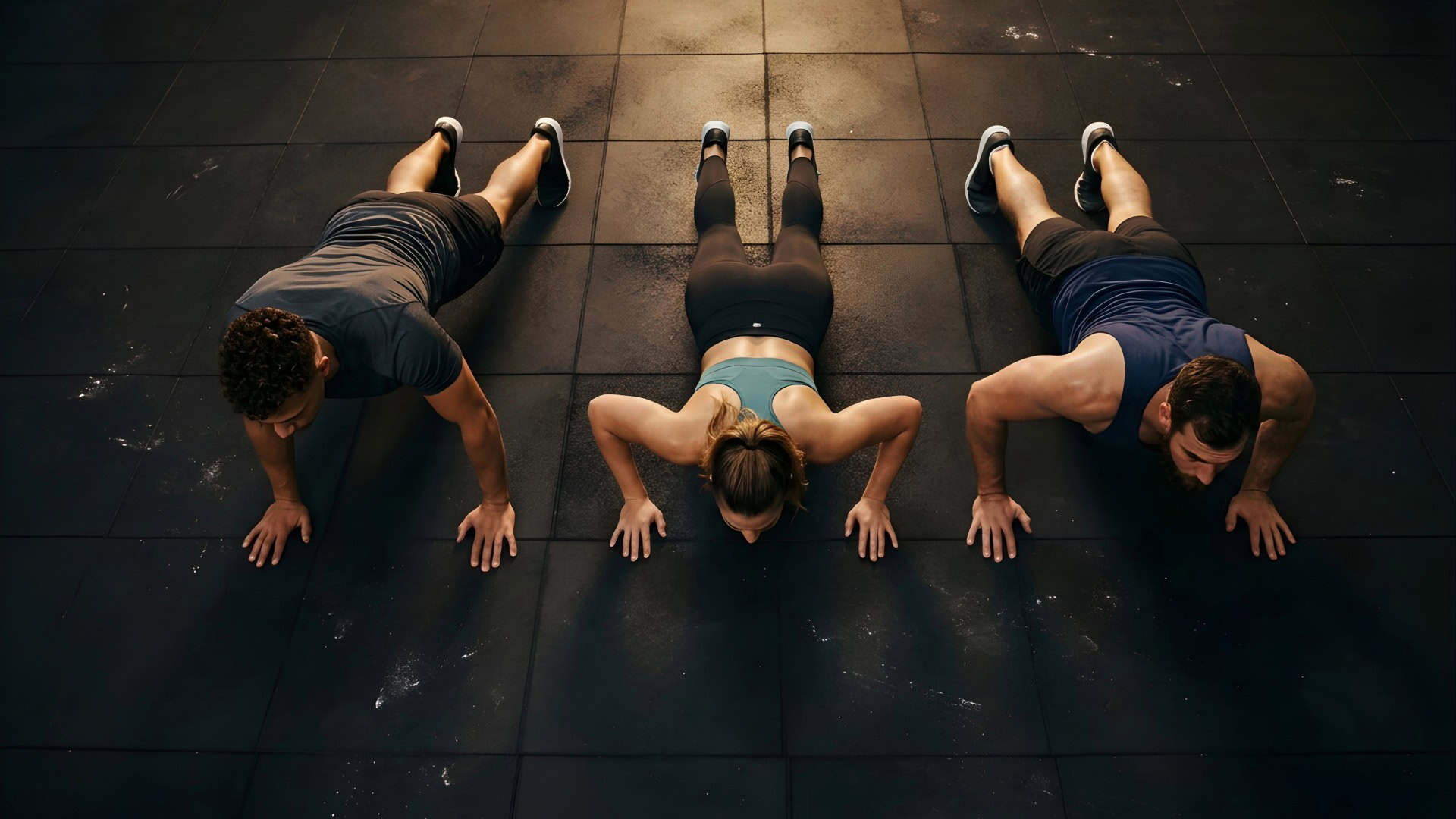
Advanced calisthenics movements, the planche, the front lever, the muscle-up, all demand a genuine strength foundation most beginners have not yet built, and attempting them prematurely both stalls progress and meaningfully increases injury risk. Starting with fundamental movements, proper beginner push ups performed with full range of motion and real control, builds the base strength every advanced skill eventually depends on.
A Realistic Starting Structure
A genuine calisthenics beginner program covers push, pull, squat, and core work several times weekly, holding at whatever progression level currently challenges without breaking form, and advancing only once the current level feels genuinely controlled rather than merely completable. This structured, patient approach is exactly what a well-designed beginner bodyweight workout provides, a clear starting point that scales naturally as strength develops over consistent months of training.
Consistency Over Intensity in the Early Months
The biggest mistake beginners make is chasing intensity before consistency, training hard for a week or two before burning out rather than building a sustainable, repeatable routine. A 10 minute workout at home performed consistently, even at a modest daily time commitment, builds far more real strength over months than sporadic, exhausting sessions ever could, since calisthenics progression genuinely rewards patient, repeated practice over any single intense effort.
A Word of Caution: Attempting advanced skills like the muscle-up, front lever, or planche before the shoulders, wrists, and elbows have built genuine tolerance is one of the most common ways calisthenics practitioners get hurt. Persistent joint pain, not just muscular fatigue, is a signal to scale back and consult a qualified physical therapist or sports medicine professional rather than pushing through toward a skill the tissue isn’t ready for.
Calisthenics offers a genuinely complete strength training system using nothing but bodyweight, gravity, and thoughtful leverage manipulation. Build the foundation patiently, respect the progression ladder, and the discipline rewards consistent practice with real, functional strength that translates directly into everyday movement quality.